S-19190AYH-M6T1U: Complete Datasheet & Pinout Analysis
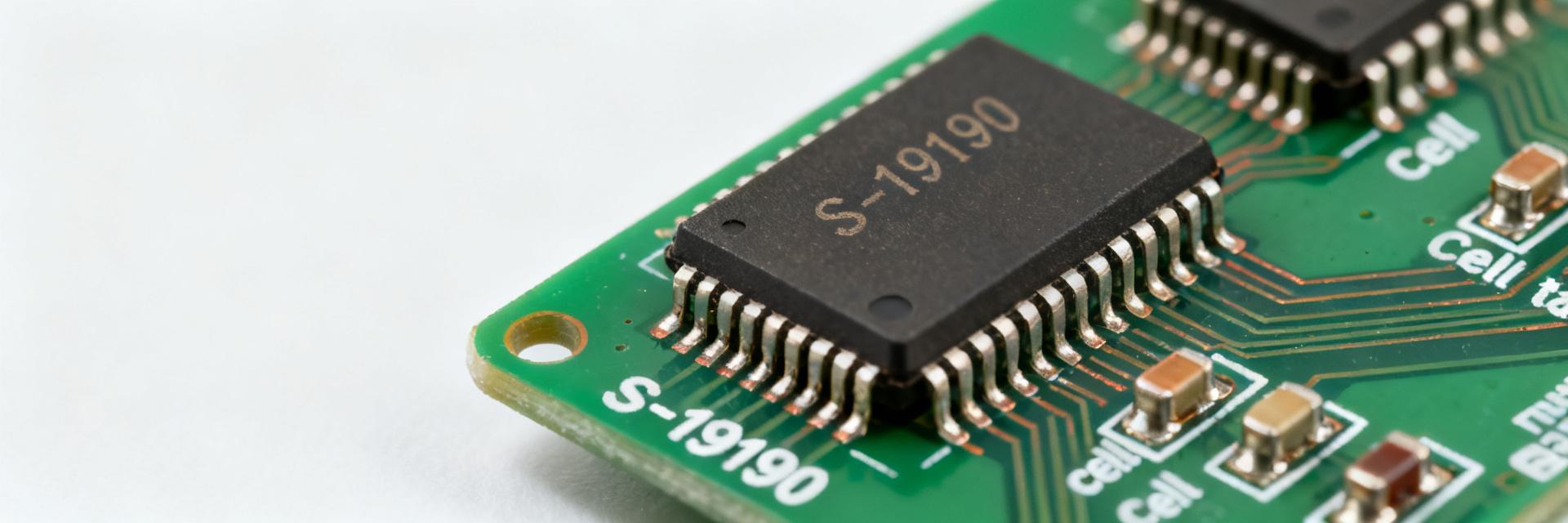
Overview: The S-19190AYH-M6T1U is a dedicated battery-voltage monitoring IC that integrates cell balancing and programmable delay/timing to protect multi-cell Li‑ion stacks. Housed in a compact SOT-23-6 package, it operates across a wide temperature range from −40°C to +105°C, ensuring safety margins in automotive and industrial battery management systems (BMS).
1. Product Architecture & Application Scope
The S-19190AYH-M6T1U belongs to the class of voltage monitor ICs that add passive cell balancing and delay logic. Core functional blocks include voltage detection comparators, a timing/delay network, balancing-control outputs, and protection-related signal outputs.
2. Electrical Specifications & Key Parameters
| Parameter | Datasheet specification (Typical) |
|---|---|
| Supply Voltage (VCC) | Refer to datasheet for specific operating rail |
| Detection Thresholds | High-precision per-cell monitoring with hysteresis |
| Detection Accuracy | ±mV level precision across temperature |
| Delay Timing | Programmable via external capacitor (TIMING pin) |
| Balancing Method | Passive bleed control via BAL_OUT |
| Operating Temp | −40°C to +105°C (Automotive grade tolerant) |
| Package | SOT-23-6 (Small Outline Transistor) |
3. Pin-by-Pin Functional Deep Dive
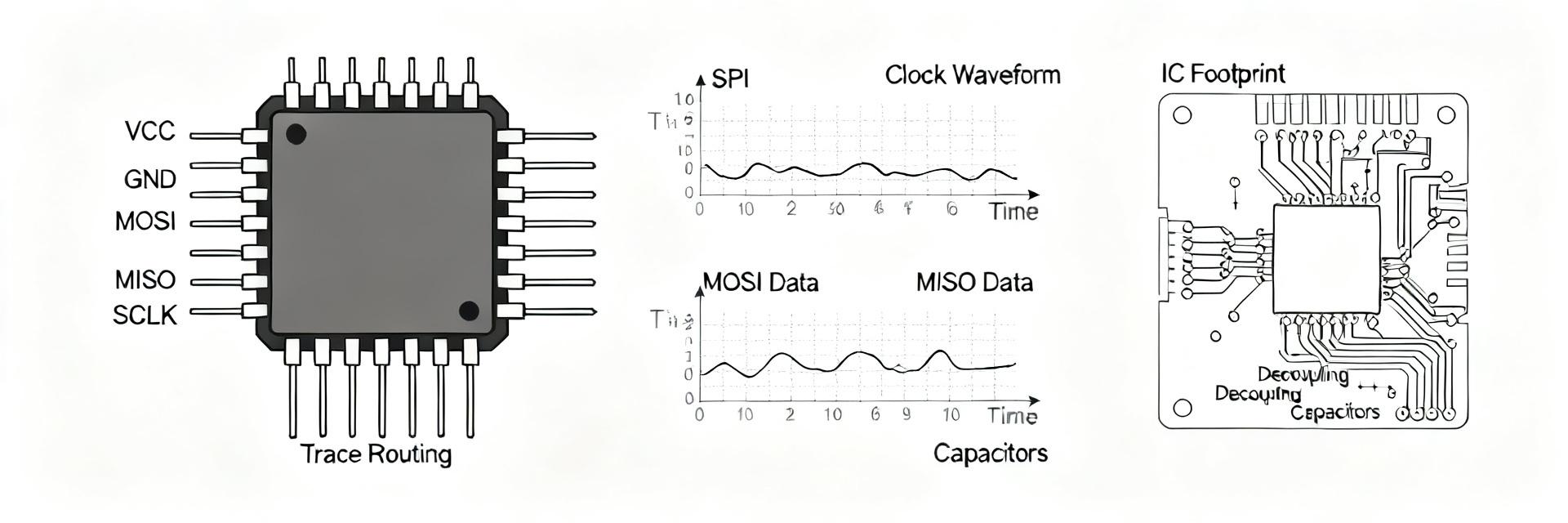
- VCC: Power input. Connect to the battery pack rail via a ferrite bead and 0.1µF decoupling capacitor.
- GND: Reference ground. Ensure a clean star-ground connection for analog accuracy.
- CELL_IN: Analog sense input. High-impedance input requiring an RC filter (e.g., 10kΩ/0.1µF) to mitigate noise.
- BAL_OUT: Open-drain output for balancing control. Drives an external bleed transistor or resistor network.
- TIMING: Capacitor connection pin. The value of the capacitor determines the delay to prevent false triggering.
- STATUS/FAULT: Digital output (Open-drain) for reporting threshold violations to the host MCU.
4. Layout & Thermal Best Practices
To ensure reliable balancing and detection accuracy, follow these industrial layout guidelines:
- Thermal Management: Place balancing resistors away from the IC to prevent heat-induced threshold drift.
- EMI Shielding: Keep sense traces as short as possible and use guard traces if the environment is electrically noisy.
- Decoupling: Place decoupling capacitors (VCC-GND) within 2mm of the IC pins to suppress high-frequency transients.
5. Frequently Asked Questions (FAQ)
How do I verify S-19190AYH-M6T1U pinout on my PCB?
Use a continuity check from the device pins to the PCB silkscreen and compare to the manufacturer datasheet pin numbering. Power the board through a current-limited supply, confirm VCC and GND, then probe sense pins with simulated cell voltages. If behaviors mismatch, stop and re-check footprint orientation.
What are common reasons S-19190AYH-M6T1U balancing does not activate?
Typical causes include incorrect timing capacitor value (delay prevents activation), insufficient bleed resistor sizing, open-drain output lacking proper pull-up during test, or noisy sense inputs causing false readings. Measure BAL_OUT while intentionally raising a cell to the threshold.
Can I use the S-19190AYH-M6T1U without a balancing resistor?
Passive balancing requires a resistor or transistor to dissipate energy; the IC only provides control signaling. For safe testing, simulate cells with isolated power supplies or a bank of resistors, and include series resistors to limit fault currents.
What is the purpose of the TIMING pin capacitor?
The timing capacitor sets the detection delay time. This prevents the IC from triggering protection or balancing due to short-term voltage transients or noise on the battery line. Consult the timing table in the datasheet for specific C-to-ms conversion values.